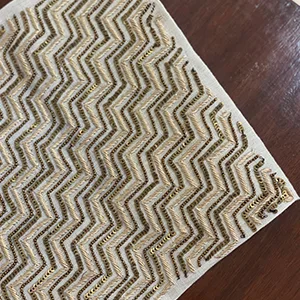
Zardozi embroidery is one of India’s most opulent needlework traditions, with origins tracing back to the Mughal era in the 16th century. The term “Zardozi” comes from the Persian words zar (gold) and dozi (work), reflecting its use of real gold and silver threads in royal garments, court textiles, and palace décor. Under emperors like Akbar, Zardozi reached artistic heights, adorning costumes, canopies, scabbards, and tapestries with exquisite floral, creeper, and paisley motifs. Following the decline of royal patronage, the craft saw a downturn but revived in post-independence India with new materials such as copper, synthetic zari, sequins, and beads.
WHAT
MAKES IT
UNIQUE:
Known for its use of gold and silver zari, dabka coils, salma-sitara, sequins, and metallic embellishments.
Combines multiple traditional techniques including couching (tilla), dabka, pearl and stone setting to create dense, opulent surfaces.
Received a GI tag in 2023
COLOURS
Traditional palettes include rich jewel tones, maroon, emerald, navy, royal blue, paired with gold or silver zari.
How much time does it take to make a product, and how many artisans are involved in making this craft? A Zardozi piece takes 3–20 days, involving 2–5 skilled karigars