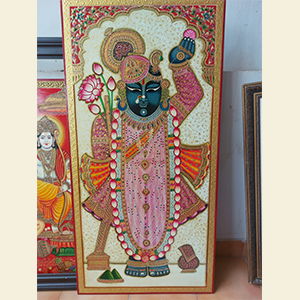
Usta miniature painting, also known as Nakkashi, originated in the royal ateliers of Bikaner during the 16th–17th centuries. Patronised by the Mughal emperors and later by Bikaner rulers, Usta artists developed a distinctive style blending Persian detailing with Indian aesthetics. The term Usta refers to master artisans skilled in fine painting, gold embossing, and lacquer techniques. Originally executed on palace walls, wooden panels, camel leather, and temple ceilings, Usta work is famous for its intricate designs and real gold leaf embossing achieved through a unique process called gold nakhashi.
WHAT
MAKES IT
UNIQUE:
Uses real 24K gold embossing (gold nakhashi).
Extremely fine Mughal–Persian miniature detailing.
Received a GI tag in 2023
COLOURS
Vibrant reds, blues, greens, and gold
Pastel shades in contemporary pieces
How much time does it take to make a product, and how many artisans are involved in making this craft? An Usta miniature takes 7–25 days, created by 1–2 master Usta artisans
MOTIFS
Royal court scenes
Mythological figures
Animals and birds
Floral and geometric patterns
RAW MATERIAL
Fabrics/paper: handmade paper, silk, or camel leather
Pigments: natural mineral and vegetable colours
Brushes: fine squirrel-hair brushes for detailing
Gold leaf, silver leaf, and organic binders
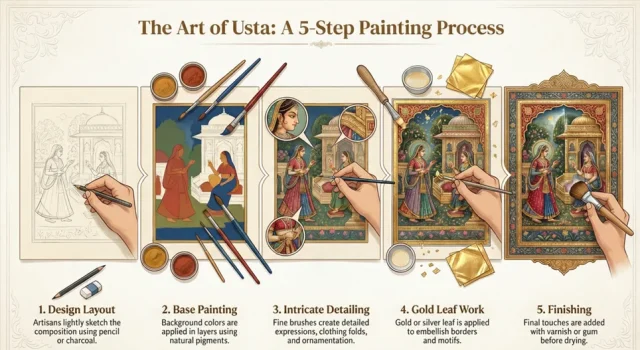
CRAFT MAKING PROCESS
HOW TO IDENTIFY GENUINE USTA MINIATURE PAINTING
Real gold embossing gives a soft glow, not a metallic shine.
Fine raised relief visible on motifs.
Miniature lines are extremely crisp and hand-drawn.
Backing material is traditionally camel leather or wood.