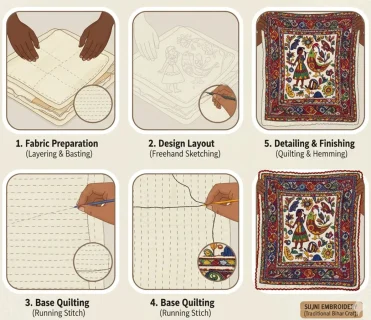
Sujni embroidery, also known as Sujini or Sujani, is a traditional quilted textile craft from Bihar, especially from regions like Madhubani and Muzaffarpur. Its origins lie in rural household practices where women repurposed old sarees and dhotis by layering them and stitching them together to create quilts. Over time, these functional textiles evolved into expressive embroidered narratives. Traditionally, Sujni depicted scenes from daily life, rituals, nature, and women’s lived experiences.
WHAT
MAKES IT
UNIQUE:
Features narrative embroidery depicting daily life, folklore, and women’s stories.
Uses fine running stitch and chain stitch to create both outlines and textures.
Traditionally made from layered old sarees, making it sustainable and upcycled.
Received its GI tag in 2006
COLOURS
Contrasting thread on colourful recycled bases, often bold primaries.
How much time does it take to make a product, and how many artisans are involved in making this craft? A Sujni embroidery piece takes 10-20 days, crafted by 1–2 women artisans