Craft Name: Soapstone Carving

Region: Agra, Jaipur, Mysuru, Mamallapuram, Puri

CRAFT
HISTORY

Where it comes from: Soapstone (steatite), a soft metamorphic rock rich in talc, has been used since Indus–Saraswati Civilization and the Chalcolithic period. Archaeological findings such as seals, figurines, beads, and sculptures from the Shunga–Maurya and Gupta periods demonstrate the continuity of soapstone craftsmanship in India. Historic temple complexes across Khajuraho, Jabalpur, and Udaipur also showcase its use.

WHAT MAKES IT UNIQUE:

  • Extremely soft, smooth stone that allows highly detailed carving.

Received a
GI tag in 2023

COLOURS

  • Natural shades of grey, green-grey, off-white, pink, dark green

How much time it takes to make a product:
Depending on complexity, a soapstone piece can take 2–15 days for intricate jali, idols, figurines

MOTIFS

  • Floral: lotus, rosettes, vines
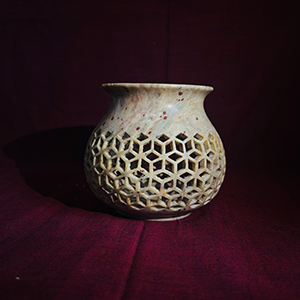
  • Geometric: jali lattice, circles, zig-zags, chevrons
  • Figurative: Hindu and Jain deities, Buddha, elephants, peacocks
  • Symbolic: conch, kalash, sun, moon

RAW MATERIAL

  • Soapstone / steatite blocks
  • Sandpaper
  • Natural wax or oils for finishing
  • Adhesives

CRAFT MAKING PROCESS

Soapstone Carving

HOW TO IDENTIFY GENUINE AND AUTHENTIC CRAFT:

  • Texture: Real soapstone feels smooth, silky, and “soapy” due to high talc content.
  • Colour: Genuine soapstone ranges from grey to green-grey or charcoal; pure white soapstone does not exist.
  • Non-porous: Does not react to acids—vinegar will not etch or stain real soapstone.
  • Scratch test: Authentic soapstone can be lightly scratched with a metal object.