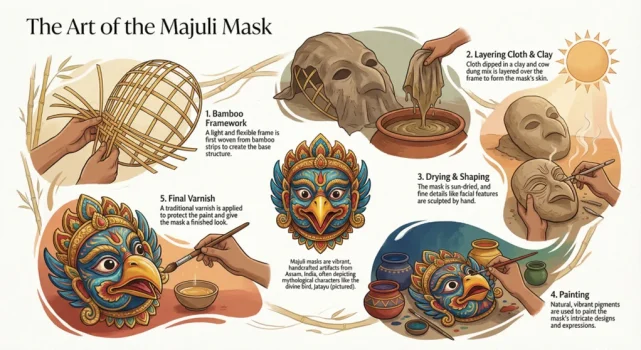
Majuli’s mask-making tradition originates in the neo-Vaishnavite monasteries (Sattras) established by the saint Srimanta Sankardev in the 15th–16th century. Masks were essential performance tools in “Bhaona,” a theatrical form used to spread devotional teachings. Artisans developed a unique technique using bamboo framework, clay, cow dung, cloth and natural fibres to create expressive, lightweight masks representing mythological characters. Passed down through monastic lineages, the craft blends spirituality, performance and community learning.
WHAT
MAKES IT
UNIQUE:
One of India’s few crafts rooted deeply in monastic theatre traditions
Unique construction technique using bamboo, clay, jute fibre, cow dung, and cloth layers.
Extremely lightweight yet expressive, suitable for performance.
Received a GI tag in 2023
COLOURS
Earth reds, yellows, greens, blacks, whites
How much time does it take to make a product, and how many artisans are involved in the process? A mask takes 3–7 days and involves 1–2 artisans depending on size.