Region: Himachal Pradesh (primarily Kangra, Chamba, and Guler regions)
CRAFT
HISTORY
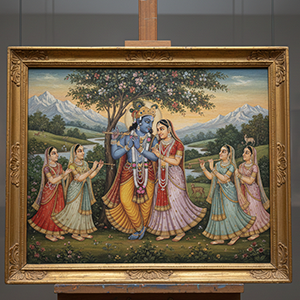
Kangra Miniature Painting emerged in the mid-18th century in the Kangra Valley under the patronage of the Kangra and Guler royal families. It is considered one of the finest schools of Pahari miniature painting. The style evolved from the earlier Guler School and flourished under the rule of Raja Sansar Chand.
WHAT
MAKES IT
UNIQUE:
Renowned for its lyrical beauty, delicate features, and romantic themes
Specialises in Bhakti (devotional) and Sringara (romantic) genres
Exceptionally fine brushwork with natural pigments
Fluid lines, soft colours, and emphasis on nature
Received a GI tag in 2023
COLOURS
Soft greens, blues, pinks, saffron
White for highlights
Gold and silver for embellishment
MOTIFS
Lord Krishna and Radha: Ras Leela, forest scenes
Gopis, nature, lotus ponds, birds
Mythological themes from Bhagavata Purana and Gita Govinda
Delicate floral borders
RAW MATERIAL
Base: handmade paper (Sialkoti paper), old manuscripts, cloth
Pigments:
Minerals (lapis lazuli for blue, malachite for green)
Gold and silver leaf
Vegetable dyes
Brushes: fine squirrel-hair brushes
Burnishing stones for polishing
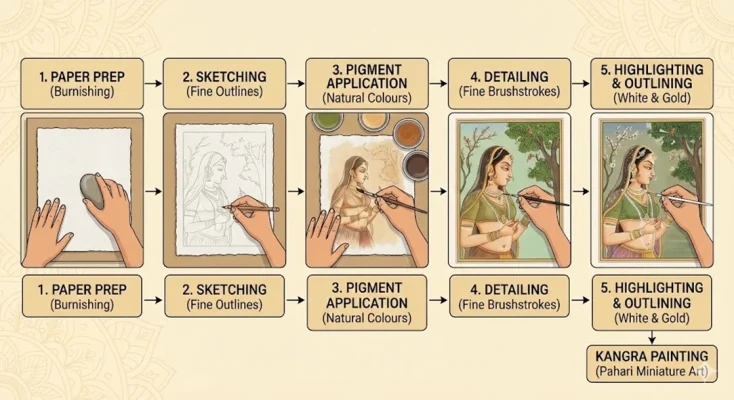
CRAFT MAKING PROCESS
HOW TO IDENTIFY GENUINE KANGRA PAINTING
Very fine facial features and soft expressions
Subtle shading and delicate colour palette
Romantic-naturalistic themes, especially Krishna-Radha stories
Smooth burnished surface
Best sourced from Kangra, Guler, and Chamba clusters in Himachal Pradesh