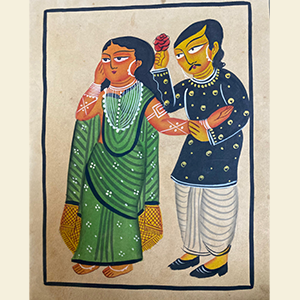
Kalighat painting originated in 19th-century Calcutta near the Kalighat temple, where patuas created quick, affordable paintings for pilgrims. Over time, these artists developed a new urban folk style characterised by bold outlines, fluid brushwork, and socio-religious themes. Kalighat painters depicted goddesses, mythological scenes, the babu–bibi culture, and satirical commentary on society.
WHAT
MAKES IT
UNIQUE:
Bold, expressive brush strokes
Satirical, narrative, and devotional themes
Distinctive watercolour or poster colour on paper
Received a GI tag in 2023
COLOURS
Bright reds, greens, blues, yellows
Black for outlining, accentuating expressions
How much time does it take to make a product, and how many artisans are involved in making this craft? A Kalighat painting takes 1–3 days, crafted by 1 artisan using brush-and-wash techniques.
MOTIFS
Mythological scenes (Kali, Shiva, Krishna)
Social satire, everyday urban life
Folk tales and narratives
Bold outlines and expressive faces
RAW MATERIAL
Base: handmade paper, cloth
Pigments: natural colours initially, later watercolours and poster colours
Brushes: bamboo sticks or fine brushes
Ink for outlines
CRAFT MAKING PROCESS
HOW TO IDENTIFY GENUINE KALIGHAT PAINTING
Bold brushwork with expressive figures
Visible hand-drawn outlines, uneven in style
Traditional themes of Bengali folklore or mythology