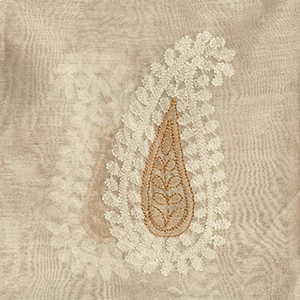
Chikankari is one of India’s most refined hand-embroidery traditions, believed to have flourished under the Mughal court in the 16th–17th centuries. Often linked to Noor Jahan, it evolved as a delicate white-on-white embroidery on fine muslin, perfect for the hot climate of Awadh. The craft drew inspiration from Persian aesthetic sensibilities and Mughal architectural motifs, leading to graceful floral patterns and lattice-like textures. After the fall of Mughal patronage, the craft survived within Lucknow’s artisan communities through domestic production.
WHAT
MAKES IT
UNIQUE:
Known for delicate hand-stitches, shadow work (bakhiya), and fine threadwork.
Features 36+ delicate stitches like shadow work, phanda, murri, and jaali
Received a GI tag
COLOURS
Traditionally white-on-white
Now also soft pastels (pinks, peaches, mint, sky blue) for contemporary wear
How much time does it take to make a product, and how many artisans are involved in making this craft? A Chikankari piece takes 5–20 days, worked on by 1–3 artisans