Craft Name: Channapatna Toys

Region: Channapatna town, Karnataka

CRAFT
HISTORY

Channapatna toy-making dates back over 200 years and is believed to have been introduced during the rule of Tipu Sultan, who invited Persian artisans to train locals in lacquerware techniques. The craft flourished in the region due to the abundance of Wrightia tinctoria (Aale mara), a soft and sustainable wood ideal for turned toys. Its iconic glossy finish comes from natural lac derived from insects, making the toys eco-friendly and child-safe. Historically, the toys included rattles, dolls, and simple household objects, often gifted during festivals. British trade links in the 18th–19th century helped spread Channapatna toys across global markets. Today, the town is known as the “Gombegala Ooru” (Toy Town) of India.

WHAT MAKES IT UNIQUE:

These eco-friendly wooden toys feature smooth lacquer finishes, vibrant natural colors, and intricate designs depicting everyday life and mythology, made child-safe without chemicals.

Received a
GI tag

COLOURS

Bright natural shades including red, green, yellow, blue, black derived from plants and stones for non-toxic vibrancy.

How much time does it take to make a product, and how many artisans are involved in the process?
Simple toys take 1-2 days, complex ones up to a week; produced by family clusters of 2-5 artisans from traditional communities.

MOTIFS

Elephants, horses, birds, mythological figures, rural scenes like farmers, animals, and toys like rattles or dolls.

RAW MATERIAL

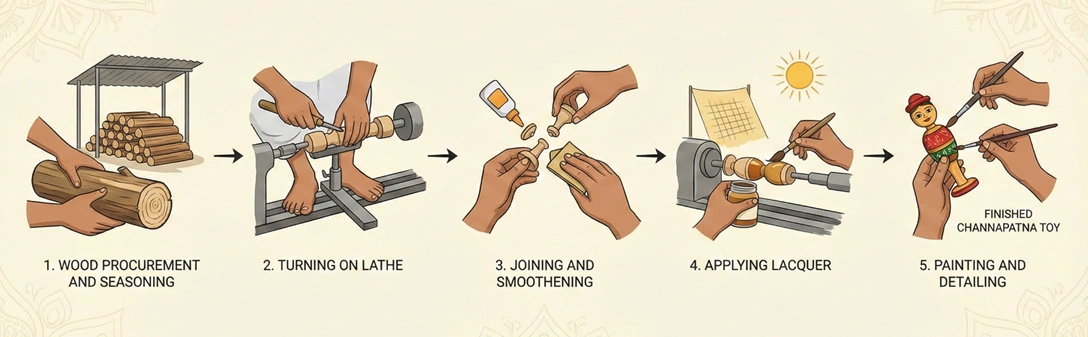
Ivory wood (Wrightia tinctoria or aale mara), lacquer from tree resin, natural dyes from seeds, vegetables, and minerals.

Distinctive features: Glossy lacquer coating applied with hands or stones, lathe-turned precision, lightweight and seamless joints.

CRAFT MAKING PROCESS

HOW TO IDENTIFY GENUINE AND AUTHENTIC CRAFT

Check for hand-turned wood grain, natural dye scents without chemical odor, subtle imperfections in lacquer sheen, GI tags from Channapatna artisans; avoid perfectly uniform machine lathe marks or fading synthetic colors.