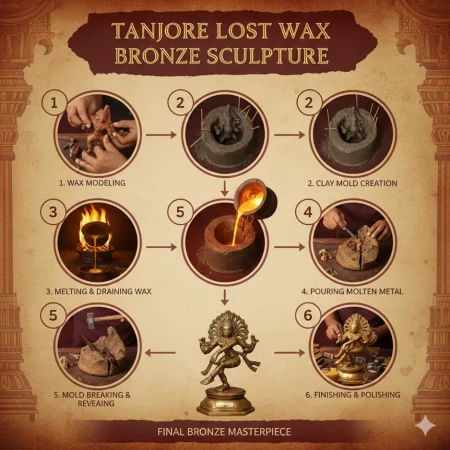
Thanjavur bronze casting is one of India’s oldest metal crafts, dating back to the Chola period (9th–13th century). The Cholas perfected the lost-wax casting technique (Cire Perdue) to create iconic bronzes of Nataraja, Parvati, Vishnu, and various temple deities. These bronzes were revered for their perfect proportions, fluidity, and spiritual symbolism. Traditionally cast by Sthapathis, who follow ancient Shilpa Shastra guidelines, the craft continued through temple patronage and royal workshops.
WHAT
MAKES IT
UNIQUE:
Created using lost-wax casting
Strict sacred proportions from Shilpa Shastra
Smooth, glowing bronze finish
Deep spiritual and ritual significance
Received a GI tag in 2023
COLOURS
Traditional palettes include rich jewel tones, maroon, emerald, navy, royal blue, paired with gold or silver zari.
How much time does it take to make a product, and how many artisans are involved in making this craft? A Zardozi piece takes 3–20 days, involving 2–5 skilled karigars
MOTIFS
Hindu deities
Iconographic elements
Temple-inspired features
Mythological scenes
Floral & geometric borders
How much time does it take to make a product, and how many artisans are involved in the process? A Thanjavur bronze idol takes 7–30 days, crafted by 2–4 Sthapathi artisans
RAW MATERIAL
Panchaloha alloy (traditional five-metal mix)
Beeswax and resin (for creating the detailed wax model)
Clay mixture from the Kaveri river basin (for the outer mold)