Craft Name: Azamgarh Pottery
Region: Nizamabad village, Azamgarh district, Uttar Pradesh
CRAFT
HISTORY
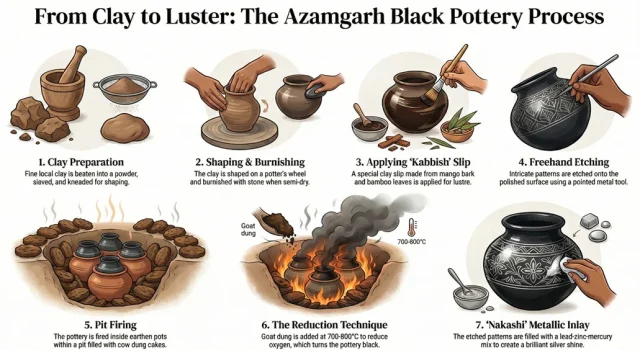
Azamgarh Pottery dates back to the Mughal period under Emperor Aurangzeb, when artisans in Nizamabad began perfecting a unique firing technique that produces the craft’s signature deep black colour. Clay rich in mica is shaped on the wheel, sun-dried, etched, coated with mustard oil, and fired in airtight kilns to create an oxygen-free environment, turning the clay black through carbon reduction.
WHAT MAKES IT UNIQUE:
- Received GI Tagged under “Nizamabad Black Pottery.”
- Black surface created not by pigment but by controlled smoke firing.
- Today, only about 500 artisans continue this labour-intensive tradition.

Received a
GI tag
COLOURS
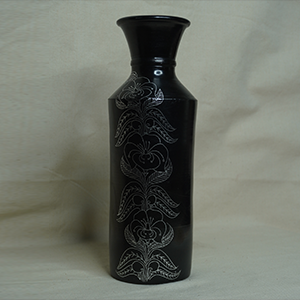
- Deep black base from smoke reduction firing
- Silvery-white highlights filled into etched grooves
How much time does it take to make a product, and how many artisans are involved in the process?
Depending on the size and intricacy, Azamgarh pottery takes about 3–10 days to complete, with typically 2–4 artisans involved in the process
MOTIFS
- Hand-engraved floral, geometric, and folk-inspired designs
- Intricate freehand etching done by women artisans
RAW MATERIAL
- Local alluvial clay
- Red ochre / geru slip
- Fine white clay for engraving highlights
- Mustard / til oil for sheen
- Paddy husk, sawdust, dried leaves for smoke-firing
CRAFT MAKING PROCESS
HOW TO IDENTIFY GENUINE AND AUTHENTIC CRAFT:
- Color and finish: The pottery should have a deep, glossy black color that is a result of the reduction firing process, not artificial paint.
- Designs: Look for intricate, detailed patterns that are carved into the clay by hand. Genuine pieces have silver or a silvery-paint-like substance