Region: Rajasthan; Gujarat, Uttar Pradesh, Bihar and Odisha
CRAFT
HISTORY
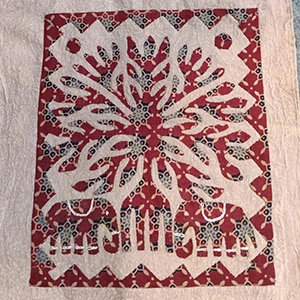
Appliqué in India has long served ritual and domestic needs, from Odisha’s temple textiles to Gujarat’s patch traditions. In Rajasthan, appliqué developed along desert trade routes and migratory pathways, evolving into a bold craft distinguished by cutwork panels and mirror inlay. Emerging strongly in regions such as Barmer, Jaisalmer and Bikaner, it served both functional and ceremonial roles—adorning tents, torans, camel trappings and bridal textiles.
WHAT
MAKES IT
UNIQUE:
Uses layering of cloth pieces onto a base fabric.
Extremely vibrant, bold motifs and colours.
Received a GI tag in 2023
COLOURS
Vibrant primaries- red, yellow, green, blue, often layered for contrast.
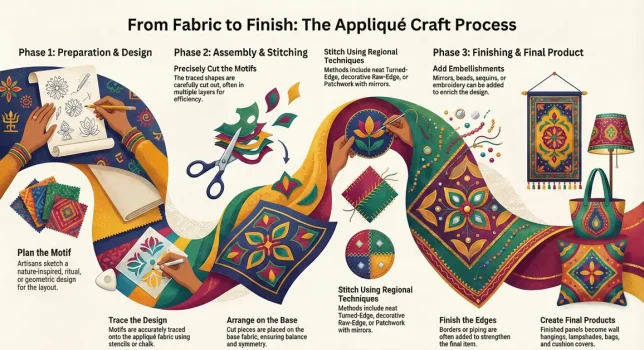
How much time does it take to make a product, and how many artisans are involved in making this craft? An applique piece takes 2–10 days, involving 1–3 artisans in the process