Region: Ladakh, Himachal Pradesh (Spiti), Sikkim, Arunachal Pradesh, and Tibetan Buddhist regions
CRAFT
HISTORY
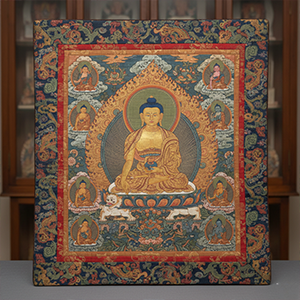
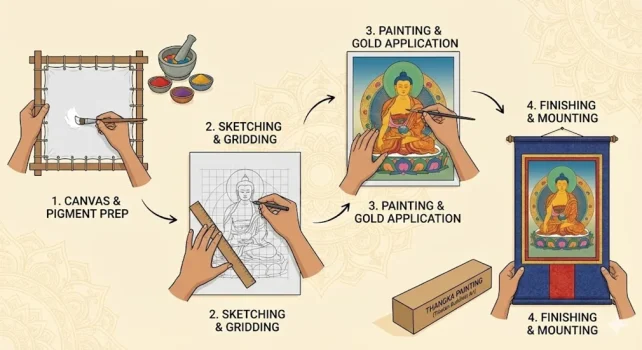
Thangka painting is a sacred Buddhist art form from Tibet, Ladakh, and Himalayan regions. Traditionally used as teaching tools and meditation aids, Thangkas depict Buddhas, mandalas, deities, and spiritual diagrams. Painted on cloth prepared with gesso, the art requires precise proportions based on ancient iconographic texts. Monasteries trained artists for years to master this devotional discipline.
WHAT
MAKES IT
UNIQUE:
Deeply spiritual and symbolic
Highly codified iconography, every line follows Buddhist scripture
Uses natural pigments, precious stones, and gold
Teachings of Tantric Buddhism represented with sacred geometry
Received a GI tag in 2023
COLOURS
Mineral blues, reds, yellows
Gold highlights
Deep earthy tones
How much time does it take to make a product, and how many artisans are involved in making this craft? A Thangka takes 15–90 days, painted by 1–2 trained monks or artists.