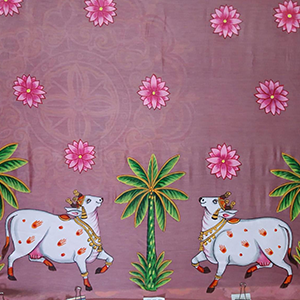
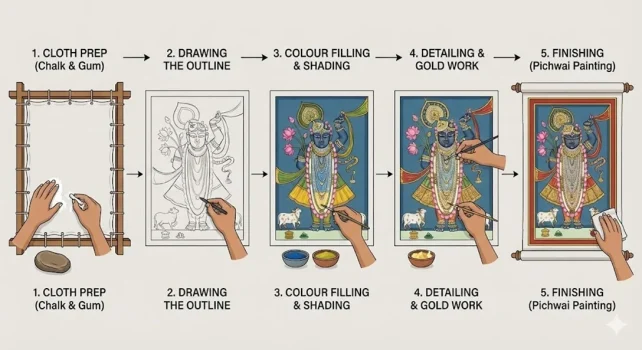
Pichwai paintings originated in Nathdwara over 400 years ago as large temple backdrops for Shrinathji. They depict festivals, seasons, and Krishna’s life. Painted on cloth using mineral and natural colours, Pichwai is known for its grandeur, devotional themes, and intricate detailing. The craft flourished under Vaishnavite patronage and continues today as a sacred art form. “Pichwai” comes from: Pichh = behind & Wai = hanging
WHAT
MAKES IT
UNIQUE:
Highly detailed devotional art
Massive cloth canvases used inside temples
Rich use of natural pigments, gold leaf & intricate motifs
Deeply connected to Pushtimarg tradition of Vaishnavism
Received a GI tag in 2023
COLOURS
Deep reds, blues, greens, gold, saffron
Black backgrounds for night scenes
Gold detailing in borders & ornaments
How much time does it take to make a product, and how many artisans are involved in making this craft? A Pichwai takes 10–45 days, painted by 2–5 artists.