
Craft Name: Palm Leaf Pattachitra
Region: Odisha (primarily Raghurajpur, Puri; also pockets of Ganjam & Cuttack region)
CRAFT
HISTORY
“Pattachitra” traditionally means painting on cloth (patta) — but Odisha has a second, equally ancient branch of this tradition: Palm Leaf Pattachitra, known as Tāla-patra Chitra or Pothi Chitra
WHAT MAKES IT UNIQUE:
This craft dates back over a thousand years, linked strongly with:
- Temple traditions of Jagannath, Puri
- Palm-leaf manuscripts, storytelling scrolls, and ritual texts
Before paper existed, religious stories, yantras, epics, and genealogies were recorded on palm leaves. Over time, artisans transformed these manuscripts into a fine art tradition — creating intricate etched illustrations, mythological panels, folding books, and scrolls.
Today, Palm Leaf Pattachitra remains one of the most distinctive artistic legacies of Odisha, known worldwide for its precision engraving and storytelling style.

Received a
GI tag in 2023
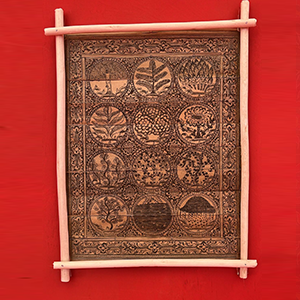
PIGMENTS & HIGHLIGHTING
Palm Leaf Pattachitra is largely monochrome.
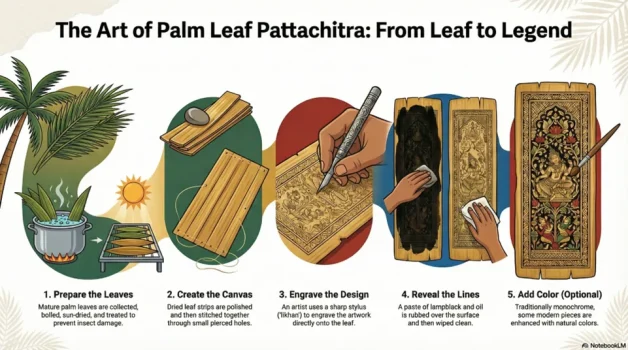
- Black is created with lamp-black (soot) mixed with oil
- The black pigment is rubbed into the engraved lines, creating contrast
- Natural colour variations (red, yellow, green) are sometimes added in modern versions, but traditionally it is black-on-natural-palm
THEMES, SUBJECTS & MOTIFS
Palm Leaf Pattachitra is known for its intricate linework and crowded, detailed compositions. Common subjects include:
- Religious & Mythological Narratives
- Jagannath, Balabhadra, Subhadra
- Krishna Leela
- Dashavatara
- Ramayana & Mahabharata panels
- Puranic stories and temple rituals
RAW MATERIAL
- Dried palm leaves (tala/talapatra)
- Leaves are collected, boiled, sun-dried, and treated with neem or turmeric to prevent insects
- Individual leaf strips are stitched with cotton thread to form panels, scrolls, or folding books (pothi)
CRAFT MAKING PROCESS
HOW TO IDENTIFY A GENUINE TRADITIONAL PATTACHITRA
When evaluating a piece claiming to be traditional Pattachitra (especially Odisha style):
- Canvas / Base: Check if the cloth has that “treated surface” look (not plain cloth or modern canvas). Traditional works have the characteristic chalk-and-gum prepped base.
- Pigments & Colours: Genuine ones use natural / mineral / earth pigments — colours will look natural (earthy, flat, without plastic-like gloss). Overly shiny or overly bright synthetic-paint effect may indicate imitation or modern prints.
- Brushwork & Outlines: The outlines and detailing should have the confident boldness — no pencil/charcoal underdrawing; you might see slight texture or layering from hand-painting.
- Borders & Motifs: Traditional decorative borders, mythological or folk themes, ornamental compositions typical to Pattachitra style.
- Finish / Lacquer: A subtle sheen or protective finish (not glossy acrylic) is consistent with traditional lacquer-based finishing.