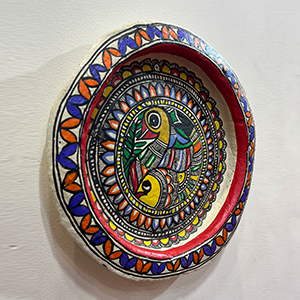
Craft Name: Madhubani Painting
Region: Madhubani, Bihar
CRAFT
HISTORY
Madhubani painting, also called Mithila art, originated in the Mithila region, with roots tracing back centuries to wedding rituals where women painted walls and floors with symbolic motifs. The earliest documentation came during the 1934 Bihar earthquake, when British officials discovered these intricate paintings on cracked walls. Traditionally, Madhubani was done using natural pigments, rice paste, and twigs on mud walls. Over time, artists shifted to handmade paper and canvas.
WHAT MAKES IT UNIQUE:
- Bold linework using twigs and nib pens.
- Strong narrative themes and symbolic motifs.
- Traditionally women-led.

Recognized with GI Tag
COLOURS
- Bright red, yellow, blue, green, black
- Earthy tones for traditional paintings
How much time does it take to make a product, and how many artisans are involved in making this craft?
A Madhubani piece takes 2–10 days, made by 1–2 women artisans
MOTIFS
- Deities: Rama, Krishna, Durga
- Animals: peacocks, elephants, fish
- Geometric borders and floral designs
- Scenes of weddings and village life
RAW MATERIAL
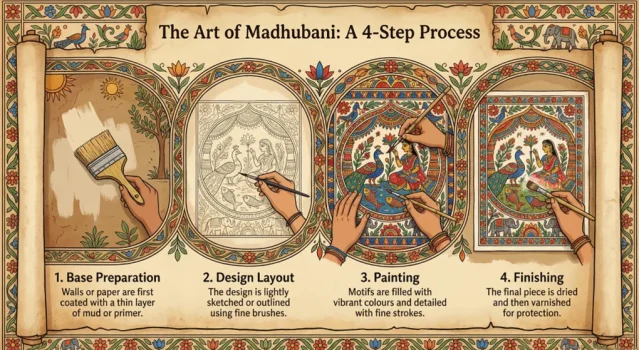
- Base: handmade paper, canvas, cloth, walls
- Pigments: natural colours from plants, turmeric, indigo, soot
- Brushes: twigs, bamboo sticks, or fine brushes
- Pens: Nib pens or cotton dipped in ink
CRAFT MAKING PROCESS
HOW TO IDENTIFY GENUINE MADHUBANI PAINTING
- Handmade natural colours with vibrant but earthy tones
- Double-line borders with intricate motifs