Walnut wood carving in Kashmir dates back to at least the 15th century, flourishing under Persian influence during the reign of Sultan Zain-ul-Abidin (Budshah). Persian craftsmen introduced sophisticated wood-carving techniques, which Kashmiri artisans adapted using locally available walnut wood (Juglans regia). Traditionally, walnut carving was used for palatial architecture, mosque interiors, furniture, ceilings, window frames, and wall panels. Over time, the craft expanded into decorative and functional household products, gaining international recognition for its craftsmanship and durability.
WHAT
MAKES IT
UNIQUE:
Uses premium Himalayan walnut wood, prized for strength and grain.
The long growth cycle of walnut trees (often 100+ years) makes walnut wood highly valued and culturally respected.
Natural resistance to termites and moisture.
Received a GI tag in 2023
COLOURS / FINISH
Natural walnut shades: light brown to deep chocolate brown
Oil-polished matte finish
Occasional antique or darkened finishes
How much time does it take to make a product, and how many artisans are involved in making this craft? A walnut wood carving piece takes 5–25 days, crafted by 1–3 master artisans
MOTIFS & PATTERNS
Persian floral vines and arabesques
Chinar leaves
Geometric lattice
Calligraphic motifs
Birds and traditional Kashmiri elements
RAW MATERIAL
Seasoned walnut wood blocks or planks
Natural oils, wax, or shellac for polishing
Wooden dowels
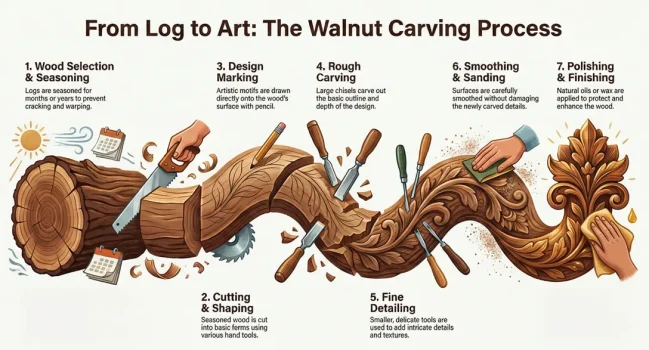
CRAFT MAKING PROCESS
HOW TO IDENTIFY GENUINE AND AUTHENTIC CRAFT
Authentic walnut has a rich, wavy grain pattern that cannot be replicated artificially.
Walnut is solid and heavy, unlike softwood or resin imitations.
Slight variations in depth and line work indicate hand craftsmanship.
Genuine pieces are oil-polished, not glossy lacquered unless specified.