Craft Name: Nagaland Bamboo Weave with cotton yarn
Region: Nagaland
CRAFT
HISTORY
Bamboo weaving is an integral part of Naga tribal life, traditionally used to create baskets, mats, storage containers, agricultural tools, fishing traps, and ceremonial items. Bamboo weaving skills were passed down orally and through practice within households, especially among women. The integration of cotton yarn into bamboo weave is a relatively contemporary adaptation. Traditionally, weaving was done entirely in bamboo or cane. This blended craft respects indigenous weaving structures while introducing textile aesthetics, creating a distinct bamboo–textile hybrid craft.
WHAT
MAKES IT
UNIQUE:
Combines rigid bamboo structure with soft cotton yarn weaving.
Reflects tribal identity through traditional weave patterns and colour symbolism.
Fully handwoven using minimal tools.
Received a GI tag in 2023
COLOURS
Natural bamboo shades
Traditional colours: red, black, white, indigo
Earthy tones derived from natural dyes
How much time does it take to make a product, and how many artisans are involved in making this craft? A bamboo-and-cotton-yarn woven product takes 2–7 days, made by 1–2 weavers
MOTIFS & WEAVE PATTERNS
Plain over-under bamboo weave with yarn inlay
Diamond and twill bamboo patterns
Horizontal or vertical yarn wrapping
Tribal geometric motifs created using coloured cotton yarn
Border highlights using yarn contrast
RAW MATERIAL
Bamboo
Cotton yarn
Natural dyes
Cane or jute
Natural varnish or oil
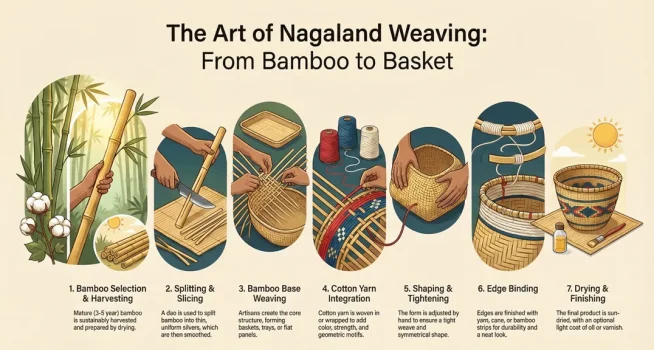
CRAFT MAKING PROCESS
HOW TO IDENTIFY GENUINE AND AUTHENTIC CRAFT
Authentic products show slightly uneven slivers, not machine-cut strips.
Genuine craftsmanship results in firm, gap-free weaving.
Yarn feels soft and fibrous, not synthetic or glossy.
Properly woven bamboo-yarn products are light yet durable.