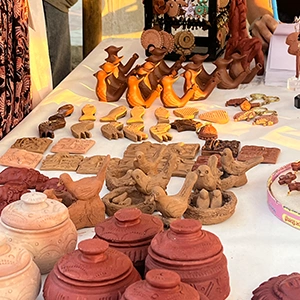
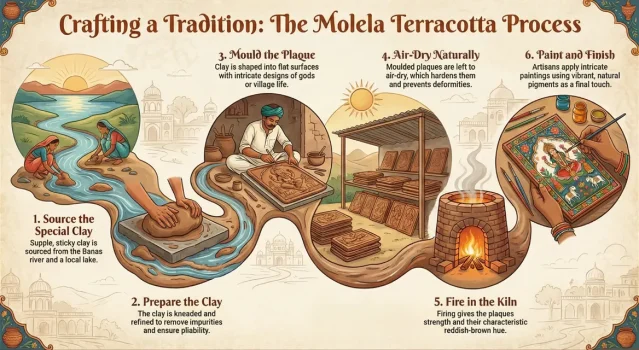
Where it comes from: Molela Terracotta is an ancient Indian sculptural craft rooted in traditions that date back to the Pre-Harappan and Harappan periods. While terracotta has existed across India for millennia, Molela developed a distinctive style of flat relief plaques, differing from typical three-dimensional idols. Practised primarily by the Kumhar community, the craft is considered divinely inspired.
WHAT
MAKES IT
UNIQUE:
Alluvial clay
Donkey dung, wheat husk, straw
Mineral pigments
Lac, resin, or varnish
Received a GI tag in 2023
COLOURS
Terracotta red base
Geru reds, greens, yellows, whites, and blacks in flat, bold colour blocks
How much time does it take to make a product, and how many artisans are involved in the process? Depending on size and intricacy, Molela plaques typically take 3–7 days involving 1–3 artisans.
MOTIFS
Hindu deities, Folk deities, Scenes from rural life, etc