Craft Name: Dhokra (Dokra)

Region: Chhattisgarh, Odisha, West Bengal, Jharkhand, Telangana, Madhya Pradesh

CRAFT
HISTORY

Dhokra is one of the oldest known non-ferrous metal casting traditions using the lost-wax technique, with origins tracing back to the Indus Valley Civilization. The famous “Dancing Girl of Mohenjo-Daro” is one of the oldest known Dhokra-style artefacts. This technique has been found in ancient Egypt, Mesopotamia, China, Greece, Mexico and Nigeria, showing its global historical presence. Traditionally, Dhokra was used to create ritual objects, idols, household tools, ornaments, and protective figurines.

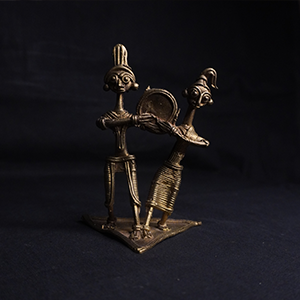
WHAT MAKES IT UNIQUE:

  • Dhokra from Bastar (Chhattisgarh), Adilabad (Telangana), and West Bengal has GI Tag recognition.
  • Each Dhokra piece is one-of-a-kind because the clay mould is broken after casting.
  • Completely handcrafted using beeswax + clay layers + brass.

Received a
GI tag

COLOURS

  • Natural metallic tones of brass/bronze
  • Warm golden, brownish, or antique finish

How much time it takes to make a product: Depending on size & complexity, Dhokra creations take 7–15 days, as each step involves natural drying, layering, wax work, casting, and finishing.

How many artisans are involved in making a product: Typically 3–5 artisans

MOTIFS

  • Tribal deities & figurines – represent protection, prosperity, and ancestral spirits
  • Animals:
    • Elephants – wisdom & strength
    • Horses – valor & movement
    • Owls – prosperity (symbol of Lakshmi)
    • Tortoises – longevity, associated with Vishnu’s Kurma avatar
  • Village life scenes: musicians, farmers, dancers

RAW MATERIAL

  • Brass (copper–zinc alloy), bronze, bell metal
  • Beeswax + damar resin + natural oils
  • Clay (fine + coarse)
  • Sand, charcoal, rice husk
  • Natural fruit acids (lemon/tamarind) for cleaning and polishing

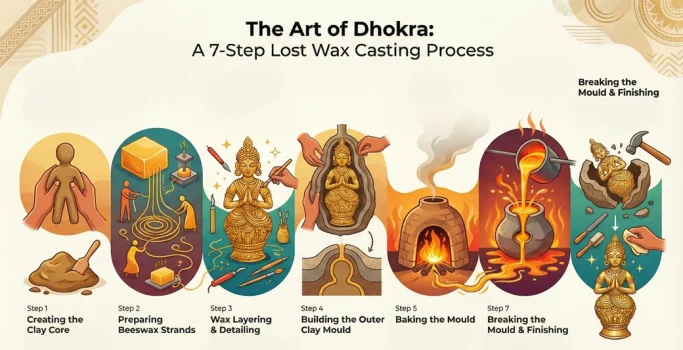
CRAFT MAKING PROCESS

Dhokra

HOW TO IDENTIFY GENUINE AND AUTHENTIC CRAFT:

  • Material & weight: Authentic Dhokra is made from brass/bronze, slightly heavy
  • Rustic finish: Real Dhokra has a raw, textured, antique look—not glossy or overly perfect.
  • Each Dhokra piece is one-of-a-kind because the clay mould is broken after casting.