Region: West Bengal, Rajasthan, Gujarat, Tamil Nadu
CRAFT
HISTORY
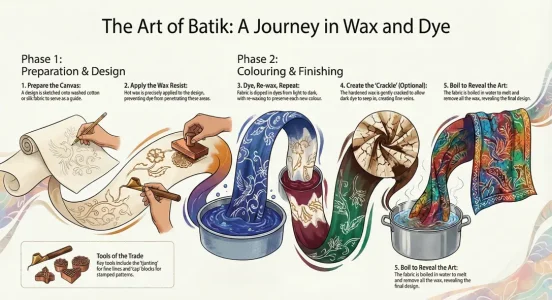
Batik in India draws from ancient wax-resist dyeing traditions practiced across Gujarat, Rajasthan, West Bengal, and Tamil Nadu. Historically, it evolved through trade links with Southeast Asia, especially Indonesia, where batik flourished into a sophisticated art. Communities like the Khatris of Kutch refined batik through copper stamps and freehand waxing.
WHAT
MAKES IT
UNIQUE:
Uses wax-resist dyeing to create crackle textures.
Combines freehand drawing, stamping, and dyeing.
Bold motifs with layered colour patterns.
Received a GI tag in 2023
COLOURS
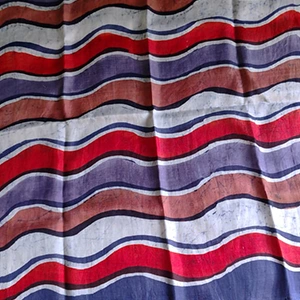
Earthy indigos, browns, ochres, along with contemporary palettes.
How much time does it take to make a product, and how many artisans are involved in making this craft? A Batik piece takes 3–12 days, created by 1–2 artisans
MOTIFS
Floral, paisley, abstract, and geometric motifs adapted to local aesthetics.
RAW MATERIAL
Fabrics: cotton, silk
Wax (beeswax/paraffin blend), tjanting or canting tools, brushes