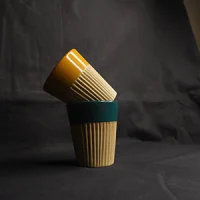
Khurja Pottery traces back to the 14th century, when Persian potters settled in Khurja and introduced glazing techniques. The town became a major ceramic hub under Mughal influence, known for blue and brown glazes. Today, Bulandshahr is referred to as India’s “ceramics city.” By the 18th century, Khurja developed its own distinctive patterns, floral motifs, and tile work. Colonial trade networks helped Khurja pottery spread across North India.
WHAT
MAKES IT
UNIQUE:
Known for vibrant glazes in blue, brown, and multicolour.
Features hand-painted floral and geometric motifs.
Uses a special quartz–clay mixture for durability.
Khurja Pottery is registered as a Geographical Indication
COLOURS
Traditional palettes include rich jewel tones, maroon, emerald, navy, royal blue, paired with gold or silver zari.
How much time does it take to make a product, and how many artisans are involved in making this craft? A Zardozi piece takes 3–20 days, involving 2–5 skilled karigars
MOTIFS
How much time does it take to make a product, and how many artisans are involved in making this craft? A Khurja pottery piece takes 5–15 days, involving 2–5 artisans in the process
RAW MATERIAL
Clay
Quartz/silica
Feldspar
Frits
Glazes/colourants
Potter’s wheel
Sandpaper/buffing tools
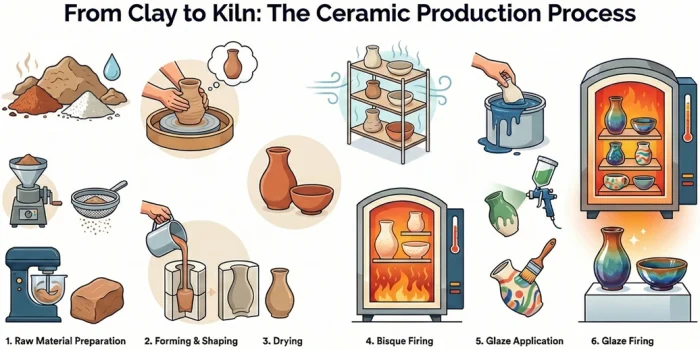
CRAFT MAKING PROCESS
HOW TO IDENTIFY GENUINE AND AUTHENTIC CRAFT:
Genuine Khurja pottery has a smooth, glossy, crack-free glaze with rich colour depth.
Real Khurja pottery uses a quartz–clay mixture, giving it a sturdy feel and clear sound when tapped.